
Foundation Inspection vs. Home Inspection Page Summary
- A Foundation Inspection focuses exclusively on structural integrity, soil movement, slab stability, and moisture-related damage, while a general home inspection offers a broad overview of the entire home.
- Home inspectors identify symptoms of problems, but foundation specialists diagnose the causes of cracks, settlement, or shifting.
- Foundation evaluations include load-bearing analysis, slab-level measurements, moisture intrusion detection, and structural mapping, all of which are not included in a standard home inspection.
- Buyers and sellers rely on specialized foundation assessments to uncover hidden risks that can impact safety and long-term home value.
- Concrete Repairman provides accurate, in-depth foundation diagnostics tailored to Arizona’s soil and moisture conditions, ensuring homeowners get reliable information—not assumptions.
Buying, selling, or maintaining a home requires accurate information about its condition—especially regarding structural safety. While a general home inspection offers a broad evaluation of visible systems, only a Foundation Inspection provides the deep structural analysis needed to uncover settlement, cracking, soil movement, and slab integrity issues.
Understanding the difference helps homeowners make informed decisions and avoid costly surprises. This guide breaks down what each type of inspection covers and why foundation specialists like Concrete Repairman are essential when structural concerns arise.
What a General Home Inspection Covers
A general home inspection provides a surface-level review of the home’s major components. Home inspectors are trained to assess functionality, safety concerns, and visible defects across multiple areas.
Key Areas Evaluated in a General Home Inspection
- Roofing and attic conditions
- Plumbing fixtures and drainage
- HVAC systems and electrical panels
- Windows, doors, and interior finishes
- Appliances, insulation, and ventilation
- Basic exterior and grading observations
General inspectors often identify symptoms—such as sticking doors or cracks—but they do not diagnose underlying structural issues.
CALL (602) 418-2970
FOR IMMEDIATE FOUNDATION REPAIR
CALL 480-725-7614 FOR IMMEDIATE FOUNDATION REPAIR
What a Professional Foundation Inspection Covers
A Foundation Inspection goes far deeper, focusing solely on the home’s structural stability. This type of evaluation uncovers problems that general inspectors cannot diagnose.
Core Elements of a Foundation Inspection
- Slab Integrity Assessment: Identifies heaving, sinking, cracking, rotation, or uplift.
- Load-Bearing Analysis: Examines how weight transfers through walls, beams, and the slab.
- Soil and Moisture Evaluation: Detects expansion, shrinkage, and hydrostatic pressure.
- Elevation Measurements: Tracks uneven floors and settlement patterns.
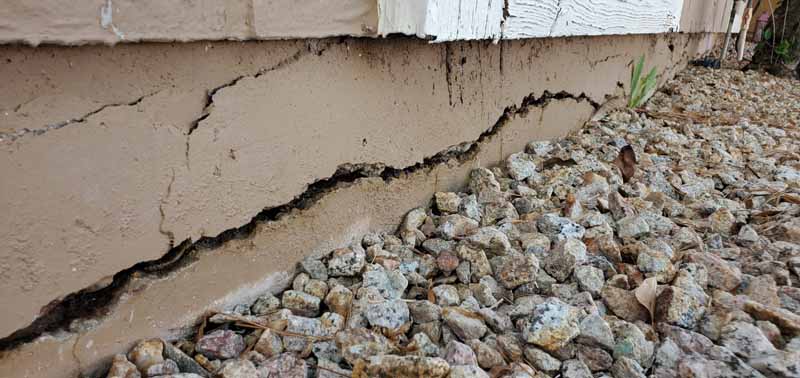
- Stem Wall and Footing Condition: Detects corrosion, cracking, and rebar failure.
- Moisture Intrusion Detection: Assesses water entry points and long-term risk areas.
Inspectors like Concrete Repairman use specialized tools and soil-based expertise to determine the cause of structural stress—not just the visible symptoms.
The Big Difference: Symptoms vs. Structural Diagnosis
General home inspectors flag issues but do not investigate the structural root cause. For example:
A home inspector might report “cracks in walls.”
A foundation inspector determines whether the cracks result from soil expansion, slab movement, drainage issues, or settlement.
Why This Difference Matters
- Structural problems often grow over time.
- Surface symptoms can mislead buyers without deeper evaluation.
- Foundation damage may require repair estimates or negotiation before closing.
- Incorrect assumptions can lead to expensive surprises later.
A Foundation Inspection provides clarity, helping homeowners make confident decisions.
Why Foundation Issues Are Not Always Visible During a General Home Inspection
Specific foundation problems develop beneath the surface long before visual symptoms appear. Home inspectors are limited to what they can see, while foundation specialists analyze structural behavior.
Hidden Foundation Issues Include:
- Subsurface soil erosion
- Slab cracking beneath the flooring
- Stem wall corrosion is not visible from the outside
- Moisture buildup under the slab
- Settlement that does not yet show interior cracks
Only a specialized Foundation Inspection can uncover these risks.
When Homeowners Should Request a Foundation Inspection
You should schedule a Foundation Inspection if:
- Crack patterns appear inside or outside the home
- Floors feel sloped, uneven, or bouncy
- Doors or windows suddenly start sticking
- There is pooling water or drainage problems
- Soil movement is visible around the perimeter
- The stem wall shows chipping, flaking, or corrosion
Real estate transactions also benefit significantly from foundation-specific evaluations—especially in areas with expansive clay soil, such as Arizona.
How Concrete Repairman Performs Foundation Inspections
Concrete Repairman specializes in diagnosing structural damage caused by soil movement and the moisture conditions common in Arizona.
What Makes Concrete Repairman’s Process Different
- Detailed slab mapping and elevation testing
- Analysis of load-bearing walls and structural alignment
- Inspection of the stem wall reinforcement and deterioration
- Moisture testing and drainage evaluation
- Identification of settlement zones and soil expansion patterns
- Clear documentation with repair recommendations
Their expertise provides homeowners with actionable insight—not guesswork.
Which Inspection Do You Need? The Safe Choice Is Often Both
A general home inspection gives a firm overview of the home’s systems.
A Foundation Inspection ensures the structure beneath those systems is sound.
Together, they create a complete picture of the home’s actual condition and help buyers, sellers, and homeowners protect their investment.
FAQs About Foundation Inspections
About the Owner: James Belville

Concrete Repairman LLC Owner James Belville is a third-generation master concrete foundation repair expert. James has extensive industry experience that includes concrete repair and Commercial and residential concrete foundation installations.
James teaches high school and college students how to finish concrete with confidence through several distributors nationwide and has appeared on the television show “The Concrete Cowboy” multiple times. With over 30 years of hands-on experience, James is skilled in the art of finishing concrete.
James Belville’s unmatched local experience means he can recognize the telltale signs of foundation problems without performing any expensive engineering calculations or analysis. James can readily identify expansive clay soil and other structural issues that could cause catastrophic building failure. This experience-based talent can save you tens of thousands of dollars.


