
Foundation Inspection vs. Home Inspection Page Summary
- Poor drainage, overwatering, and improper grading are among the top causes of preventable foundation damage in residential homes.
- Soil erosion, moisture imbalance, and expansive clay soil movement can weaken slab integrity when ignored.
- Early warning signs—like wall cracks, sloping floors, and sticking doors—often go unnoticed until the damage becomes severe.
- A professional Foundation Inspection helps detect soil pressure, drainage issues, and moisture problems before they become costly structural repairs.
- Concrete Repairman provides expert evaluations that identify homeowner-related risks and recommend corrective steps to protect long-term foundation stability.
Many homeowners unintentionally create the conditions that lead to foundation movement, cracking, and long-term structural damage. While foundation problems can appear suddenly, most are the result of gradual stress caused by water, soil conditions, or overlooked warning signs. Understanding these mistakes—and how a professional Foundation Inspection can identify them early—is essential for protecting your home.
This guide explains the most common homeowner errors and how Concrete Repairman helps prevent foundation damage with expert diagnostics tailored to local soil and moisture conditions.
Mistake #1 — Poor Drainage Around the Home
Water is the most significant factor in foundation movement. When drainage systems fail or water collects around the slab, the soil expands and contracts, and it shifts.
How Poor Drainage Causes Foundation Damage
- Creates hydrostatic pressure against the slab and stem wall
- Saturates expansive clay soil, causing heaving
- Weakens soil support and leads to settlement
- Promotes moisture intrusion and stem wall corrosion
Warning signs such as pooling water, clogged gutters, and soggy soil indicate a need for corrective drainage work and a Foundation Inspection to assess potential damage.
CALL (602) 418-2970
FOR IMMEDIATE FOUNDATION REPAIR
CALL 480-725-7614 FOR IMMEDIATE FOUNDATION REPAIR
Mistake #2 — Overwatering Landscaping Near the Foundation
Well-intentioned landscaping can unintentionally harm foundation stability. Overwatering plants or running irrigation too close to the home saturates the soil, leading to imbalanced moisture levels.
Problems Caused by Overwatering
- Soil expansion under the slab
- Moisture is creeping into the stem wall
- Shifting load-bearing points
- Increased cracking and uplift
Homeowners often underestimate how much water shrubs, trees, and lawn irrigation release near the foundation. Concrete Repairman frequently identifies moisture-driven foundation issues during inspections.
Mistake #3 — Improper Grading That Directs Water Toward the Home
The slope of the ground around your home plays a critical role in the health of your foundation. Improper grading allows water to flow toward the house instead of away from it.
Why Grading Issues Matter
- Soil erosion near slab edges
- Saturated ground causing slab heave
- Water accumulation against the stem wall
- Increased risk of cracking and soil displacement
A professional Foundation Inspection evaluates grading issues and identifies structural effects caused by poor drainage pathways.
Mistake #4 — Planting Trees Too Close to the Foundation
Tree roots seek moisture, and as they expand, they can displace soil and affect foundation stability.
How Tree Roots Impact Foundations
- Absorbs moisture unevenly, causing soil shrinkage
- Create pressure against the slab
- Interfere with drainage lines
- Contribute to differential settlement
During an inspection, Concrete Repairman evaluates soil disruptions caused by trees and recommends appropriate mitigation strategies.
Mistake #5 — Ignoring Early Warning Signs of Foundation Damage
Many foundation problems begin with subtle symptoms that homeowners overlook.
Common Warning Signs Include:
- Wall or ceiling cracks
- Sticking doors or windows
- Uneven or sloping floors
- Separation at baseboards or crown molding
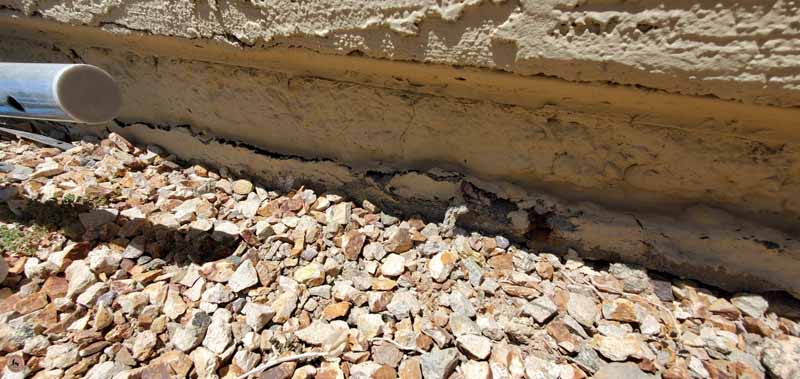
- Soil is pulling away from the foundation
These indicators often precede more serious structural shifts. A Foundation Inspection identifies the underlying causes before repairs become expensive.
Mistake #6 — Allowing Soil Erosion Near the Foundation
Wind, rain, and improper landscaping can erode soil around the foundation, reducing support and increasing settling.
Effects of Soil Erosion
- Exposed footings
- Uneven load distribution
- Cracks forming in concrete surfaces
- Loss of stability during seasonal moisture changes
Erosion is often easy to correct when caught early, making regular inspections essential.
Mistake #7 — Neglecting Downspouts and Gutters
Broken or misaligned gutters and downspouts direct water toward the foundation rather than away from it.
How Gutter Issues Harm Foundations
- Increase moisture in the soil
- Create saturation pockets that weaken slab stability
- Cause soil expansion occurs during wet seasons
- Accelerate settlement during dry periods
A simple redirection of water flow can prevent thousands of dollars in structural damage.
How Foundation Inspections Help Prevent These Problems
A Foundation Inspection identifies issues related to water, soil movement, and structural changes before they become significant problems. During an inspection, Concrete Repairman evaluates:
- Soil moisture imbalance
- Drainage and grading conditions
- Cracks and early settlement indicators
- Stem wall integrity and corrosion
- Structural load path alignment
- Slab movement patterns
These insights help homeowners correct minor problems now and prevent extensive repairs in the future.
Why Concrete Repairman Should Be Your First Call
With decades of experience in Arizona’s challenging soil conditions, Concrete Repairman provides accurate diagnostics and honest recommendations. Their inspections help homeowners reduce long-term costs, improve structural safety, and protect property value.
FAQs About Foundation Inspections
About the Owner: James Belville

Concrete Repairman LLC Owner James Belville is a third-generation master concrete foundation repair expert. James has extensive industry experience that includes concrete repair and Commercial and residential concrete foundation installations.
James teaches high school and college students how to finish concrete with confidence through several distributors nationwide and has appeared on the television show “The Concrete Cowboy” multiple times. With over 30 years of hands-on experience, James is skilled in the art of finishing concrete.
James Belville’s unmatched local experience means he can recognize the telltale signs of foundation problems without performing any expensive engineering calculations or analysis. James can readily identify expansive clay soil and other structural issues that could cause catastrophic building failure. This experience-based talent can save you tens of thousands of dollars.


