Key Takeaways:
- Hiring the right foundation repair contractor in Phoenix requires evaluating hands-on mastery, teaching credentials, and ROC licensing — not just marketing claims.
- Phoenix’s expansive clay soils demand specialized local knowledge that generational craftsmen, like third-generation professionals, possess far more deeply than franchise-trained technicians.
- Always verify ROC licensing, bonding, and insurance before signing any contract — then ask whether your contractor can explain and teach what they do.
Not every crack in your foundation is a disaster. However, every foundation repair contractor you hire could be. The difference between a skilled craftsman and a well-marketed franchise representative can mean the difference between a permanent fix and a recurring problem that costs you tens of thousands of dollars over time.
In 2026, Phoenix homeowners are flooded with options — digital ads, door-knockers, and slick franchise brochures. So how do you cut through the noise? You set criteria based on mastery, accountability, and local knowledge. This guide walks you through exactly that.
CALL (602) 418-2970
FOR IMMEDIATE FOUNDATION REPAIR
CALL 480-725-7614 FOR IMMEDIATE FOUNDATION REPAIR
What Level of Hands-On Experience Do Foundation Repair Contractors Actually Have?
Experience is not measured solely in years. It is measured in the depth of problems solved, the variety of conditions encountered, and the ability to recognize what others miss.
When you interview foundation repair contractors, ask a direct question: “How long have you personally been working with your hands on foundation repairs?” Then listen carefully. Corporate franchise representatives often receive weeks of classroom training before being sent into the field. A true craftsman, by contrast, has likely spent decades on job sites — learning not just from instruction, but from failure, adaptation, and refinement.
Consider what third-generation mastery means in practical terms. James Belville of Concrete Repairman LLC brings more than 30 years of hands-on experience to every project — knowledge passed down through generations of family craft. That kind of lineage creates an intuitive understanding of materials, soil behavior, and structural dynamics that no franchise manual can replicate.
According to the American Concrete Institute, concrete repair requires an understanding of material science, structural behavior, and site-specific conditions. Generational craftsmen absorb this knowledge through practice, not just reading.
Ask your candidates how they first learned their trade. Ask what the most unusual foundation problem they ever solved was. Ask what they would do if their initial repair approach did not work. Genuine experts answer these questions with specific, confident detail. Marketers answer them with vague reassurances.
Can They Teach What They Do? The Teaching Test for True Mastery Among Foundation Repair Contractors
Here is a test most homeowners never think to apply: ask your contractor to explain what they are doing and why — in plain language.
True mastery is inseparable from the ability to teach. Craftsmen who understand their work deeply can explain it clearly. Those who follow procedures without understanding the underlying principles cannot.
James Belville has taken this principle further than most. He actively teaches foundation repair and concrete restoration techniques through distributor networks nationwide — not as a side activity, but as a core expression of his expertise. His appearances on Concrete Secrets from Amazon Prime further demonstrate a level of professional recognition that comes only from genuine mastery.
Why does this matter to you as a homeowner? Because a contractor who teaches their craft is accountable to a higher standard. They cannot hide behind vague explanations or rushed timelines. They have publicly demonstrated what they know.
Furthermore, the Portland Cement Association emphasizes that skilled concrete and foundation work requires ongoing professional development and knowledge transfer. Contractors who contribute to the education of the broader trade community are generally the most current and most competent practitioners.
When you request a foundation inspection, pay attention to whether the contractor explains their findings clearly or simply hands you a proposal. The ones who explain are the ones who understand.
Do They Hold Current ROC Licensing, and What Does That Really Mean?
In Arizona, the Arizona Registrar of Contractors (ROC) licenses, regulates, and investigates complaints against contractors. Licensing is not optional — it is a legal requirement. However, the presence of a license number tells you only the beginning of what you need to know.
Concrete Repairman LLC holds ROC license number 300512 and is fully licensed, bonded, and insured. That combination matters because each element protects you differently. Licensing confirms competency standards were met and that the state can take action if work is substandard. Bonding protects you if the contractor fails to complete the work or meet contractual obligations. Insurance protects you if anyone is injured or property is damaged during the project.
Before hiring any of the foundation repair contractors you are considering, visit the ROC website and look up their license number directly. Confirm the license is active, not suspended or expired. Confirm the classification matches the type of work being proposed. A license in one trade category does not automatically authorize work in another.
Additionally, ask about liability insurance coverage limits. A contractor with minimal coverage may not fully protect you in the event of significant property damage. Ask for a certificate of insurance — reputable contractors provide this without hesitation.
The ROC also maintains a public record of complaints and disciplinary actions. A clean record over many years is a meaningful signal of professional conduct and quality workmanship.
What’s Their Approach to Phoenix’s Unique Expansive Soil Challenges?
Phoenix sits on some of the most geologically complex soil conditions in the country. Maricopa County’s expansive clay soils — particularly the reactive caliche layers common across Chandler, Scottsdale, Tempe, and Mesa — behave very differently from soils in other regions. They expand when wet and contract when dry, creating cyclical movement that stresses foundations in ways that standard repair approaches may not adequately address.
According to the U.S. Geological Survey, expansive soils affect millions of homes each year and require site-specific engineering approaches—not generic solutions from a national playbook.
This is where local expertise becomes critical. Foundation repair contractors who have spent their careers working specifically in the Phoenix metro area develop an intuitive understanding of how local soils move, how irrigation patterns affect soil moisture levels, and which repair methods hold up against Arizona’s seasonal temperature extremes.
When you explore foundation repair services in Phoenix, ask candidates how long they have been working in the Valley. Ask them to describe the specific challenges posed by Phoenix’s soil conditions and how they address them in their repair methodology. If they give you a generic answer that could apply anywhere in the country, that is a red flag.
True local expertise means understanding not just the repair but the environment it must survive in. That knowledge is built over years — and most reliably over generations.
How Do They Handle Comprehensive Structural Issues Beyond Basic Repairs?
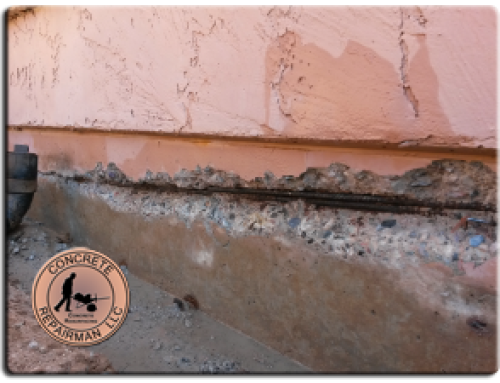
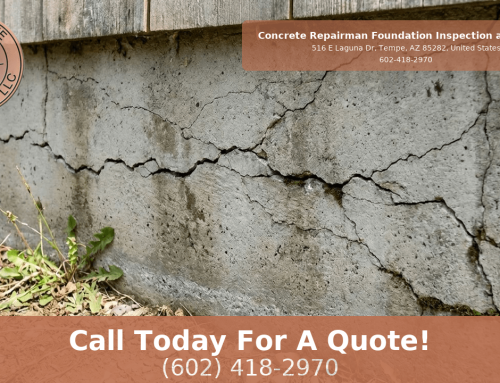
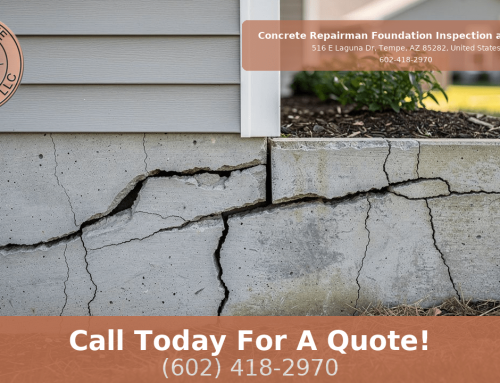
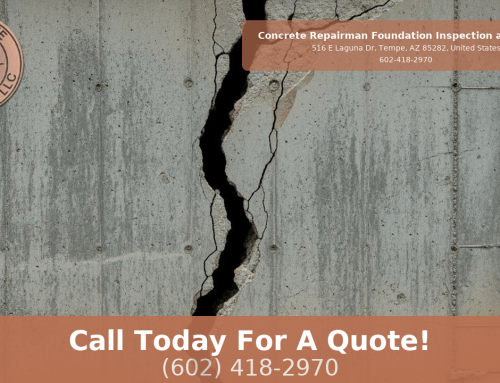
Foundation problems rarely exist in isolation. A crack in a foundation wall may indicate soil settlement, hydrostatic pressure, or structural movement that extends into the stem wall, slab, or attached concrete flatwork. The best foundation repair contractors approach each project as a diagnostic exercise — not a quick patch job.
Ask your contractor what their process is for identifying related structural issues. Do they inspect the entire perimeter of the foundation? Do they assess interior slab conditions? Do they evaluate concrete flatwork, such as driveways, walkways, and patios, that may be showing early warning signs of the same underlying problem?
James Belville’s approach through Concrete Repairman LLC encompasses the full scope of foundation and concrete repair services — from foundation walls and stem walls to flatwork and structural slabs. This comprehensive perspective matters because a contractor who only sees one piece of the problem may fix the symptom while leaving the cause unaddressed.
Furthermore, ask about their post-repair process. Do they offer follow-up inspections? Do they stand behind their work with a clear warranty? Craftsmen who are confident in their results are typically willing to define exactly what that confidence looks like in writing.
The goal of any foundation repair is not simply to make a crack disappear. The goal is to restore structural integrity and prevent recurrence. Choosing among foundation repair contractors means finding someone who holds themselves accountable to that full outcome — not just the invoice date.
Frequently Asked Questions About Foundation Repair Contractors in Phoenix
About the Owner: James Belville

Concrete Repairman LLC Owner James Belville is a third-generation master concrete foundation repair expert. James has extensive industry experience that includes concrete repair and Commercial and residential concrete foundation installations.
James teaches high school and college students how to finish concrete with confidence through several distributors nationwide and has appeared on the television show “The Concrete Cowboy” multiple times. With over 30 years of hands-on experience, James is skilled in the art of finishing concrete.
James Belville’s unmatched local experience means he can recognize the telltale signs of foundation problems without performing any expensive engineering calculations or analysis. James can readily identify expansive clay soil and other structural issues that could cause catastrophic building failure. This experience-based talent can save you tens of thousands of dollars.