Key Takeaways:
- Horizontal foundation cracks are the most serious type of wall crack a homeowner can face, often signaling active lateral soil pressure that will worsen without professional repair.
- Carbon fiber straps and wall anchors are the two most effective solutions for horizontal cracks; epoxy injection alone is rarely sufficient for this crack type.
- Arizona’s expansive clay soils and extreme heat cycles accelerate foundation damage, making early intervention by a qualified local contractor critical for Maricopa County homeowners.
How To Fix Horizontal Foundation Cracks: A Complete Guide for Arizona Homeowners
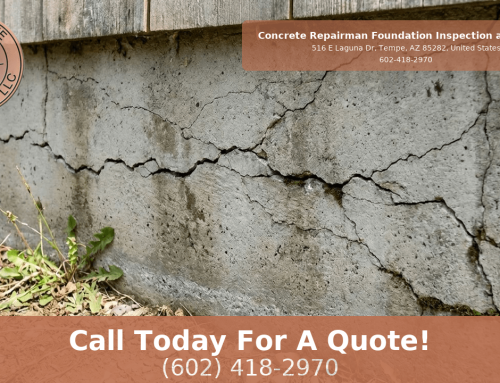
A crack running sideways across your foundation wall is not just a cosmetic problem. It is a structural warning. Horizontal foundation cracks form when soil outside the wall pushes inward with more force than the wall can resist. Left alone, that pressure does not stop. The wall keeps bowing, bending, and eventually failing. For homeowners in Phoenix, Chandler, Scottsdale, Tempe, and Mesa, Arizona’s expansive clay soils and extreme temperature swings make this problem especially urgent.
This guide covers everything you need to know: why horizontal cracks form, how they compare to other crack types, what repair methods actually work, what the process looks like, and how to find the right contractor in Maricopa County.
What Horizontal Foundation Cracks Actually Mean
Most homeowners have seen hairline vertical cracks and thought little of them. Horizontal cracks are a different category entirely.
Why This Crack Type Is the Most Dangerous
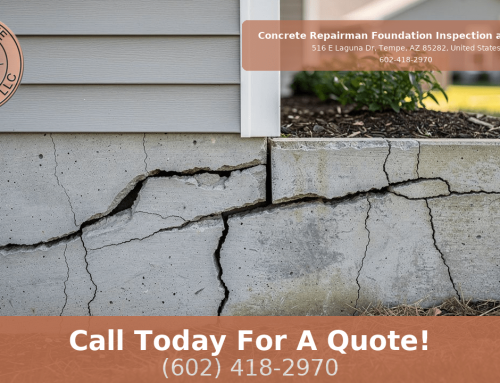
A vertical crack typically forms as concrete cures and shrinks, or as the soil beneath settles slightly. Horizontal cracks, by contrast, form because the wall bends. Soil outside your foundation presses inward at mid-wall height, where structural resistance is lowest. The result is a crack that runs parallel to the ground, sometimes all the way across the wall.
Structural engineers classify horizontal cracks as high-priority damage because the underlying cause (lateral pressure) is active and ongoing. Every wet season, every frost-thaw cycle, and every year of Arizona’s soil expansion adds more stress to an already compromised wall.
Horizontal vs. Vertical vs. Diagonal Cracks
Here is a straightforward comparison:
- Horizontal cracks: Caused by lateral soil pressure. The most serious type. Almost always require professional structural repair.
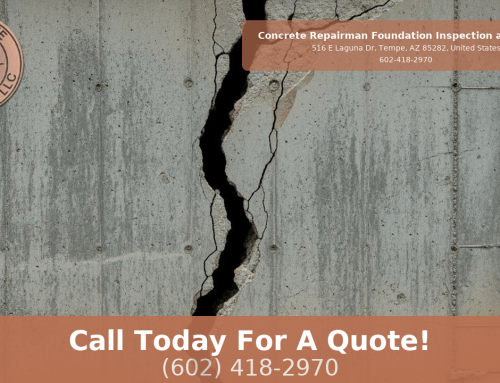
- Vertical cracks: Often caused by normal concrete shrinkage or minor settlement. You may monitor or seal them, depending on width.
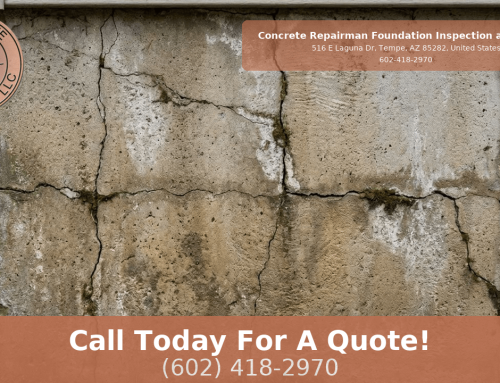
- Diagonal cracks: Usually signal differential settlement, where one section of the foundation sinks more than another. Serious, but different repair strategy.
If your crack runs horizontally, do not treat it like a minor cosmetic fix. The repair method matters enormously.
What Happens If You Ignore a Horizontal Crack
Ignoring a horizontal foundation crack is one of the costlier decisions a homeowner can make. Over time:
- The wall bows further inward under continued soil pressure.
- The crack widens, allowing water intrusion.
- Moisture accelerates the deterioration of concrete and rebar.
- The structural connection between the wall and floor system weakens.
- Full wall replacement becomes the only option, at a cost many times higher than early repair.
In Arizona, expansive clay soils absorb monsoon moisture and swell aggressively, then shrink during dry periods. This annual cycle acts like a hydraulic pump against your foundation wall. In 2026, we are seeing more East Valley homeowners contact us after delaying repairs through just two or three monsoon seasons, only to face significantly more extensive damage.
CALL (480) 725-7614
FOR IMMEDIATE FOUNDATION REPAIR
CALL 480-725-7614 FOR IMMEDIATE FOUNDATION REPAIR
Repair Methods That Actually Work
Not every repair product is appropriate for horizontal cracks. The right method depends on how far the wall has moved and how active the pressure is.
Carbon Fiber Straps
Carbon fiber straps are the preferred solution when a wall has bowed inward less than two inches, and the movement appears stable. A contractor bonds high-strength carbon fiber strips vertically across the crack and into the wall-to-floor and wall-to-ceiling connections. Carbon fiber is extraordinarily strong in tension, resisting the inward pull of lateral soil pressure without requiring excavation.
The advantages are real: minimal disruption, no excavation required, drywall-friendly installation, and a permanent solution. Carbon fiber does not rust, rot, or weaken over time. This method works well for block walls and poured concrete walls alike.
Wall Anchors and Helical Tiebacks
When a wall has moved more than two inches, or when the movement is clearly still active, wall anchors or helical tiebacks provide a more powerful solution. Wall anchors connect a steel plate on the interior of the wall to an anchor plate buried in the soil several feet from the foundation. Over time, the anchor system can actually be tightened to gradually pull the wall back toward its original position.
Helical tiebacks are drilled directly through the wall and into stable soil beyond the zone of active pressure. Both methods are more invasive than carbon fiber straps, but they address walls that have already moved significantly.
Why Epoxy Injection Is Not Enough
Epoxy injection fills the crack and bonds the concrete back together. It works well for vertical shrinkage cracks. For horizontal cracks, epoxy addresses the symptom, not the cause. The lateral soil pressure that created the crack is still there. Without straps, anchors, or tiebacks to resist that pressure, the epoxy seal will fail as the wall keeps moving.
Any contractor recommending epoxy injection alone for a horizontal crack is not offering you a structural solution.
The Repair Process, Step by Step
Understanding the process helps you know what to expect and how to evaluate any contractor you consider.
Step 1: Structural Assessment
A qualified technician inspects the crack, measures how far the wall has moved from plumb, identifies any additional signs of distress (stair-step cracking, floor separation, door misalignment), and determines whether movement is still active. This assessment drives every decision that follows.
Step 2: Method Selection and Proposal
Based on the assessment, the contractor recommends carbon fiber straps, wall anchors, helical tiebacks, or a combination. A written proposal should include the specific products, the installation locations, and the warranty terms. Be cautious of any proposal that skips the structural measurement step.
Step 3: Installation
Carbon fiber strap installation typically takes one day. The surface is ground smooth, the straps are bonded with structural epoxy, and the system is anchored to the footing and the floor structure above. Wall anchor installation may take one to two days and requires drilling through the wall and placing exterior anchors. The yard above the anchor plates is minimally disturbed.
Step 4: Documentation and Monitoring
Professional contractors document the pre-repair wall position and recommend periodic monitoring. If wall anchors are installed, a simple tool measures whether additional tightening is needed over time to recapture lost position. This follow-up step is easy to overlook, but it separates a lasting repair from a temporary fix.
What to Look for in a Foundation Repair Contractor
Choosing the right contractor in the Phoenix metro area is as important as choosing the right repair method.
Credentials and Experience
Look for a contractor who measures wall deflection before recommending a method, provides a written structural warranty on the repair system, and can explain the specific load ratings of the products they install. Ask how many horizontal crack repairs they have completed and request references from similar jobs.
Red Flags to Avoid
Be wary of contractors who:
- Recommend only epoxy injection for a horizontal crack
- Refuse to perform a thorough pre-repair measurement
- Provide verbal-only estimates without written documentation
- Pressure you to sign same-day without allowing you to compare bids
DIY Risk Assessment
Some homeowners ask whether they can fix a horizontal foundation crack themselves. The honest answer is: probably not safely. Products sold at hardware stores can fill the crack visually, but they do not address lateral pressure. Without the proper anchoring system, a DIY crack fill gives you false confidence while the wall keeps moving. For a cosmetic vertical crack, DIY is reasonable. For a horizontal crack, the risk of an improperly repaired structural failure is not worth the cost savings.
Why Concrete Repairman for Arizona Foundation Repair
Concrete Repairman serves homeowners across Phoenix, Chandler, Scottsdale, Tempe, Mesa, and the surrounding Maricopa County area. Our team understands Arizona’s unique soil conditions and the specific demands those conditions place on residential foundations.
We perform a complete structural assessment before recommending any repair method. We use proven carbon fiber and anchor systems backed by written warranties. And we give every homeowner a straightforward explanation of what is happening to their wall, what it will take to fix it, and what it will cost before any work begins. No surprises.
If you have noticed a horizontal crack in your foundation wall, do not wait for the next monsoon season. Contact Concrete Repairman today for a professional assessment.
FAQ
What causes horizontal cracks in a foundation wall, and are they serious?
Horizontal cracks form when lateral soil pressure pushes against the foundation wall with more force than the concrete or block can resist. This typically happens at mid-wall height, where resistance is lowest. They are the most structurally serious type of foundation crack because the underlying pressure is active and ongoing, meaning the crack will widen and the wall will continue to bow without a structural repair.
How much does it cost to repair horizontal foundation cracks in Phoenix, Arizona?
Repair costs in the Phoenix metro area typically range from a few thousand dollars for a carbon fiber strap system on a wall with minor movement to significantly more for wall anchors or helical tiebacks on a severely bowed wall. The final cost depends on wall length, the degree of deflection, and the required repair method. Getting a written assessment before any work begins is the best way to understand your specific cost.
Carbon fiber straps vs. wall anchors for horizontal foundation crack repair: which is better?
Carbon fiber straps are the preferred solution when a wall has bowed less than two inches and movement appears stable. They require no excavation and provide permanent resistance to tension. Wall anchors are more appropriate when the wall has moved more than two inches or when movement is still active, because they can be tightened over time to gradually restore the wall toward its original position. A qualified contractor should measure wall deflection before recommending either method.
Can horizontal foundation cracks be repaired without replacing the entire foundation?
Yes, in most cases. Unless a wall has collapsed or moved so far that it has completely lost structural integrity, carbon fiber straps, wall anchors, or helical tiebacks can stabilize and repair the wall without full replacement. Full replacement is a last resort and carries costs many times higher than early intervention. This is why early action matters so much.
Do horizontal foundation cracks in Arizona get worse due to expansive soil and heat?
Absolutely. Arizona’s expansive clay soils absorb moisture during monsoon season and swell dramatically, then shrink during dry periods. This repeated cycle puts significant lateral pressure on foundation walls year after year. Combined with extreme heat that dries and shifts the soil further, local conditions accelerate crack progression faster than in many other regions. Homeowners in Chandler, Scottsdale, and Mesa should treat horizontal cracks as urgent, not routine.
How long does it take to repair horizontal foundation cracks professionally?
A carbon fiber strap installation on a standard residential wall typically takes one day. Wall anchor or helical tieback systems may take one to two days depending on wall length and site conditions. Most homeowners can remain in the home during repairs. The concrete bonding epoxy used in strap systems cures within hours, and the repair area is typically ready for finishing work within a day or two of installation.
Is DIY horizontal foundation crack repair safe or should I hire a structural engineer?
DIY products can fill a crack visually, but they cannot address the lateral soil pressure causing the crack. Without proper anchoring or a strap system to resist that pressure, the wall will keep moving, and the fill will fail. For a horizontal crack, I strongly recommend hiring a qualified foundation repair contractor. If significant movement has occurred, consulting a licensed structural engineer before repair is also a reasonable step to ensure the repair method matches the damage severity.
Sources
- Lateral soil pressure and foundation wall damage classifications, Federal Emergency Management Agency (FEMA), Building Science resources: https://www.fema.gov/emergency-managers/risk-management/building-science
- Carbon fiber reinforcement for concrete structures, Wikipedia, Fiber-reinforced concrete: https://en.wikipedia.org/wiki/Fibre-reinforced_concrete
- Expansive soils and their effect on residential foundations, Arizona Geological Survey: https://azgs.arizona.edu/
- Foundation crack evaluation and repair methods, U.S. Army Corps of Engineers, Engineer Manual EM 1110-2-2002: https://www.publications.usace.army.mil/USACE-Publications/Engineer-Manuals/
A Legacy of Excellence in Foundation Repair
With over 30 years of hands-on experience, James Belville and the team at Concrete Repairman LLC have established themselves as trusted experts in foundation repair throughout the Phoenix Metro Area, serving communities like Ahwatukee, Mesa, Chandler, Scottsdale, and beyond. Our reputation for delivering high-quality repair solutions is rooted in our unwavering commitment to excellence, ensuring that every project is completed with the utmost precision and care.
At Concrete Repairman LLC, we pride ourselves on being fully licensed, bonded, and insured, offering peace of mind to homeowners who entrust us with their foundation repairs. Our team of professionals prioritizes safety, quality workmanship, and complete customer satisfaction. We stand behind every repair with industry-leading warranties, demonstrating our confidence in the long-lasting durability of our services. Whether addressing small cracks or more significant foundation issues, we are committed to protecting the integrity of your home.
One of the common issues we encounter in Arizona foundations is efflorescence, a crystalline deposit caused by moisture intrusion. While it may appear harmless initially, efflorescence can be a warning sign of underlying problems such as cracks, stem wall deterioration, or basement moisture. Left unchecked, these issues can lead to significant structural damage. Our team specializes in diagnosing and repairing these moisture-related concerns, offering tailored solutions that prevent further damage and maintain your home’s long-term stability.
At Concrete Repairman LLC, call our Foundation Repair office in the Greater Phoenix Metro Area, including Gilbert, Glendale, Queen Creek, and Sun City. If you suspect foundation damage or want to protect your home from potential issues, contact us at 602-418-2970. Our expert team is ready to inspect thoroughly and offer the best repair solutions to safeguard your home for years.