Key Takeaways:
- Foundation repair versus replacement is rarely black-and-white — Phoenix’s expansive clay soil creates unique conditions that demand honest, individualized assessment from a qualified master craftsman.
- ROC licensing (such as ROC 300512 held by Concrete Repairman LLC) is your baseline protection: it requires bonding and insurance, but credential verification remains your responsibility.
- If a contractor cannot clearly explain why the repair won’t work or why full replacement is necessary, that alone is reason enough to seek a second opinion before spending tens of thousands of dollars.
You got a quote. Maybe two. One contractor said repair. Another said replacement. Now you’re standing in your living room, staring at a crack in the wall, wondering who to believe — and whether you’re about to make a very expensive mistake.
That confusion is not your fault. The foundation repair industry in Phoenix is full of well-meaning generalists and, unfortunately, some who benefit financially from steering you toward the most expensive solution. Understanding the real difference between foundation repair versus replacement — and knowing who is qualified to make that call — can protect you from unnecessary costs and structural mistakes that compound over time.
James Belville of Concrete Repairman LLC has built his reputation on a single principle: every homeowner deserves a completely honest assessment. As a third-generation master craftsman with more than 30 years of hands-on experience and ROC license number 300512, James brings expertise to Phoenix-area foundation work that most contractors simply cannot match.
This guide is not a sales pitch. It is the information you need to make a smart, protected decision.
CALL (602) 418-2970
FOR IMMEDIATE FOUNDATION REPAIR
CALL 480-725-7614 FOR IMMEDIATE FOUNDATION REPAIR
The Honest Assessment: What Every Homeowner Deserves to Know
The most important moment in any foundation project is the assessment. Not the proposal. Not the contract. The assessment — specifically, whether the person evaluating your home has the knowledge and the honesty to tell you what you actually need, even when that answer is simpler and less expensive than they might prefer to recommend.
A genuine Arizona foundation inspection starts with understanding your slab’s structural integrity. A qualified evaluator will examine the type and pattern of cracking, check for differential settlement, assess drainage conditions, and look at the soil conditions influencing your foundation’s behavior. They will explain what they find in plain language.
If a contractor walks through your home in ten minutes and hands you a quote for full replacement without explaining the specific structural findings that make repair impossible — that is a red flag. Genuine structural evaluation takes time, tools, and deep knowledge of how Phoenix’s soil behaves across seasons.
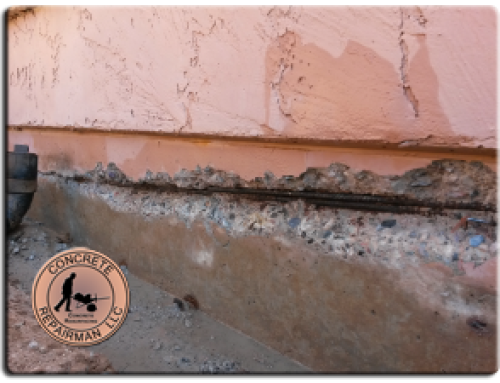
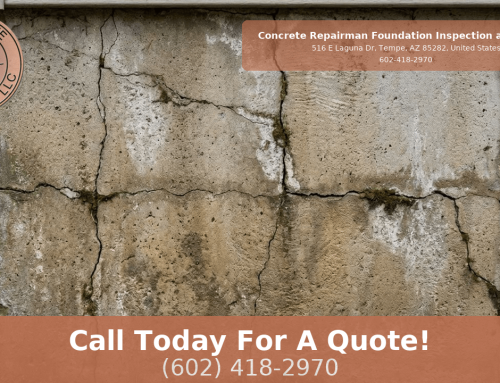
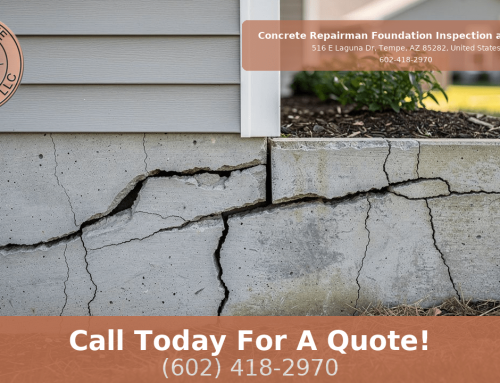
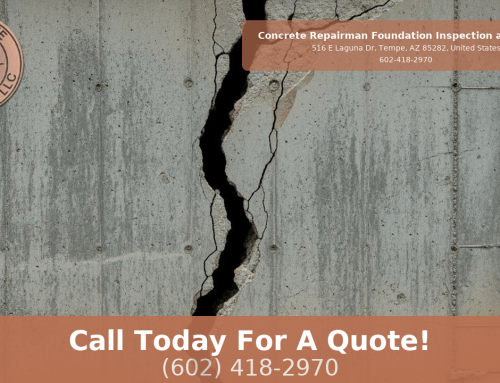
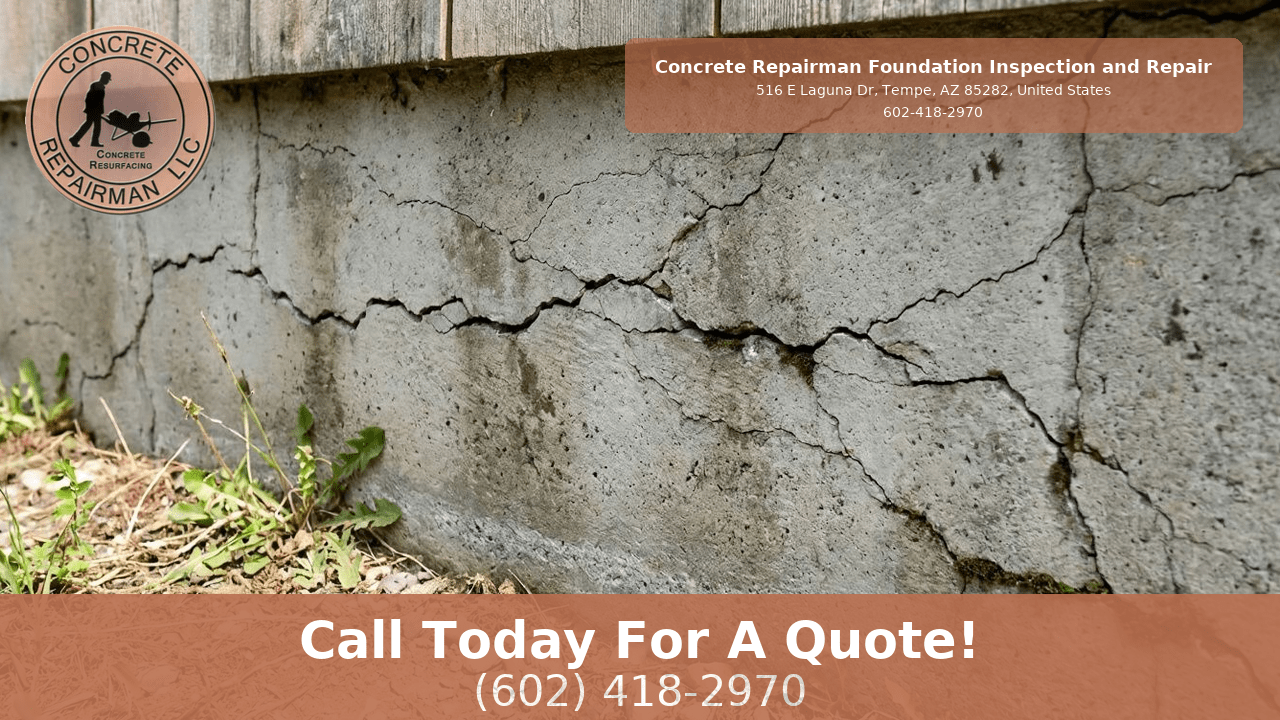
Furthermore, repair and replacement serve very different structural scenarios. A foundation that has experienced moderate crack displacement due to soil movement may be an excellent candidate for crack sealing and slab stabilization. A foundation with catastrophic structural failure, rebar corrosion through the full slab depth, or widespread settlement that has compromised the entire support system may genuinely require more extensive intervention. The difference between these scenarios is significant — and it must be established through evidence, not assumptions.
Crack Sealing Versus Full Replacement: Making the Right Choice
The question of foundation repair versus replacement is ultimately a structural, not a cost, question. However, understanding the basic criteria helps you evaluate any recommendation you receive.
Crack sealing is appropriate when cracks result from normal soil movement, thermal expansion, or minor settlement that has not compromised the slab’s load-bearing capacity. Hairline cracks, surface crazing, and even moderate cracks with limited displacement often respond well to professional polyurethane or epoxy injection. This process stabilizes the crack, prevents moisture intrusion, and restores the slab’s integrity without demolition.
Slab stabilization addresses situations where the foundation has begun to sink or shift. Methods like mudjacking or polyurethane foam lifting can restore a settled slab to its original position without tearing out the entire foundation. These approaches are significantly less disruptive and less expensive than full replacement — and when the underlying soil conditions are also addressed, they deliver lasting results.
Full replacement is the only genuine answer when structural failure is widespread. Specifically: when rebar has corroded and lost tensile strength throughout the slab, when multiple sections have settled independently and cannot be unified, or when the existing pour was so deficient that restoration is structurally impossible. These conditions are diagnosable. A master craftsman can point to specific evidence. If they cannot, ask them to.
In 2026, Phoenix homeowners will have more repair options available than ever before. However, the availability of options makes a qualified assessment more important — not less — because more choices also mean a greater opportunity to be sold the wrong one.
Phoenix Soil Movement: Why One-Size-Fits-All Solutions Fail
Phoenix sits on some of the most geologically active residential soil in the United States. The expansive clay soils common across Maricopa County — including areas of Chandler, Scottsdale, Tempe, and Mesa — absorb water and expand dramatically, then shrink and contract as they dry. This cycle creates cyclic loading on your foundation that simply does not exist in most other regions.
According to the Arizona Geological Survey, expansive soils affect large portions of the Phoenix metro area and are a primary driver of residential foundation movement. The Federal Emergency Management Agency identifies expansive soils as one of the most costly geological hazards in the United States, causing billions of dollars in structural damage annually.
This soil behavior means that solutions designed for stable clay soils in other states may perform poorly in Phoenix. A contractor who learned their trade in a non-expansive-soil environment may not fully understand how seasonal moisture changes affect the long-term success of a repair or stabilization approach.
James Belville’s three decades of Phoenix-specific experience mean he understands how local soil behaves across monsoon seasons, extended droughts, and landscape irrigation cycles. That regional knowledge directly affects whether a given repair will hold over time. For stem wall restoration in Phoenix specifically, understanding the soil pressure dynamics against below-grade concrete is essential to a repair that lasts rather than one that simply passes an initial inspection.
The ROC License Requirement: Your Protection Against Unqualified Work
Arizona’s Registrar of Contractors licensing system exists specifically to protect homeowners. An ROC license requires bonding and insurance, meaning that if a contractor causes damage or abandons a project, you have recourse. ROC 300512 is James Belville’s verifiable license number — you can confirm it directly on the ROC website before any work begins.
However, a license is a baseline, not a guarantee of expertise. Verify that the license is current and in good standing. Confirm the license class covers the specific work proposed. And critically, ask about the contractor’s specific experience with foundation repair versus replacement decisions — because that judgment call requires more than a license. It requires deep structural knowledge and professional integrity.
Unqualified contractors sometimes operate under general handyman licenses that technically permit minor concrete work but do not reflect the expertise required for structural foundation evaluation. The distinction matters enormously when your home’s structural integrity is the subject.
Red Flags: When to Seek a Second Opinion from a Master Craftsman
Certain contractor behaviors should prompt you to pause and seek a second opinion immediately — regardless of how credible the initial assessment seemed.
Pressure for immediate decisions: Foundation work rarely requires same-day decisions. A contractor who tells you the offer expires today or that waiting even one week will make things dramatically worse is using urgency as a sales tactic, not describing a genuine structural emergency.
Inability to explain their findings: A qualified master can explain exactly what they found, why it indicates a specific condition, and why their proposed solution addresses that condition. If the explanation is vague or fails to address your questions, that is a problem.
Recommending full replacement without detailed justification: Foundation repair versus replacement is a significant decision. Any recommendation for a full replacement should be supported by specific, evidence-based findings—not by generalizations about your home’s age or the severity of surface cracks.
No written scope of work: Every legitimate foundation project should include a detailed written description of the work to be performed, the materials to be used, and the expected outcome. Verbal assurances are not protection.
Missing or unverifiable license credentials: Check the ROC website yourself. Do not accept a copy of a license document at face value without independent verification.
If you encounter any of these situations, contact a master-level professional in Phoenix for an independent foundation assessment. The cost of a second opinion is negligible compared to the cost of the wrong solution.
Learn more about what proper foundation inspection and repair services look like before committing to any contractor proposal.
For additional guidance on your homeowner rights, the Arizona Attorney General’s Office provides consumer protection resources applicable to contractor disputes.
Frequently Asked Questions
About the Owner: James Belville

Concrete Repairman LLC Owner James Belville is a third-generation master concrete foundation repair expert. James has extensive industry experience that includes concrete repair and Commercial and residential concrete foundation installations.
James teaches high school and college students how to finish concrete with confidence through several distributors nationwide and has appeared on the television show “The Concrete Cowboy” multiple times. With over 30 years of hands-on experience, James is skilled in the art of finishing concrete.
James Belville’s unmatched local experience means he can recognize the telltale signs of foundation problems without performing any expensive engineering calculations or analysis. James can readily identify expansive clay soil and other structural issues that could cause catastrophic building failure. This experience-based talent can save you tens of thousands of dollars.