


Page Summary
- Steel rebar corrosion drives concrete cracking and spalling, creating major durability costs for reinforced concrete structures.
- Migrating corrosion inhibitors can be used as admixtures, surface treatments, or rehabilitation applications to help protect embedded reinforcing steel.
- Testing of a migrating corrosion inhibitor showed an inhibitor layer forming on rebar and reduced chloride driven corrosiveness after the inhibitor moved through the concrete cover.
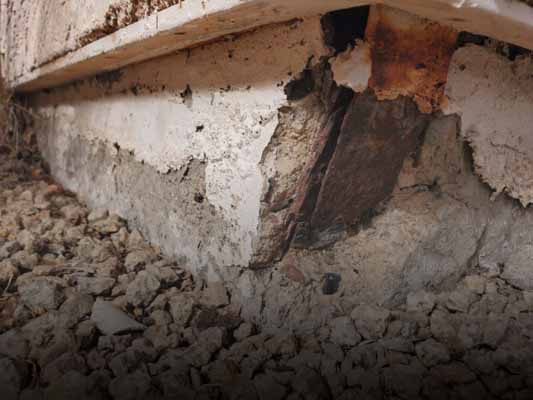
In Arizona, corrosion can still be a real problem even without coastal salt air. Chlorides can come from deicing salts tracked in from other regions, contaminated aggregates, some admixture histories, splash exposure near pools, irrigation overspray, planter boxes, and repeated wetting and drying that carries salts deeper into the concrete. Once the steel starts to corrode, the corrosion products occupy more volume than the original steel and create internal pressure that can fracture the surrounding concrete.
Concrete Repairman LLC helps homeowners and commercial property owners in the Phoenix area understand why rebar corrosion happens, what warning signs to look for, and which prevention and rehabilitation options can slow or stop corrosion activity so repairs last longer.
Corrosion Protection of Steel Rebar
Steel corrosion is a major concern for any society with reinforced concrete structures. More specifically, the United States, with its vast infrastructure of concrete and steel bridges, superhighways, and reinforced concrete buildings, has spent billions of dollars on corrosion protection. Among the commercial technologies available today, migrating corrosion inhibitors (MCIs) show versatility in that they can be incorporated as admixtures, surface treatments, or used in rehabilitation programs.
The effectiveness of Cortec’s MCI 2022, a mixture of amine carboxylates, amino alcohols, and siloxane, on reinforced concrete using various application methods was evaluated. Bode and Nyquist plots showed high polarization resistance values for inhibitor-treated concrete. XPS analysis verified the presence of inhibitor chemistry and chloride molecules on the steel rebar surfaces.
Depth profiling revealed a 100 nm amine-rich inhibitor layer and chloride ions on the rebar, confirming that MCI had migrated through the concrete coverage to suppress chloride ion corrosiveness. Eight concrete specimens were prepared with reinforcement placed at 1 inch (2.5 cm) concrete coverage and tested for 400 days. MCI 2022 was applied directly to the rebar by surface impregnation and combined in a mortar coating. Electrochemical monitoring techniques were applied to samples immersed in 3.5% NaCl at ambient temperatures.
The corrosion behavior of the steel rebar was monitored using AC electrochemical impedance spectroscopy (EIS). The changes in the polarization resistance and the corrosion potential of the rebar were compared with previous investigations conducted on several admixtures and stainless steel rebar. Click Here for more info.
Common Warning Signs of Rebar Corrosion
Property owners often notice the surface symptoms before they understand the cause. Early signs can appear minor, but they may point to active corrosion below the surface.
- Rust colored staining on concrete
- Cracks that follow a straight line or rebar pattern
- Chipped concrete that exposes steel
- Hollow sounding concrete when tapped
- Flaking, scaling, or delamination
- Repeated failure of previous patches
- Concrete breaking away near slab edges or foundation stems
- Moisture staining near cracks, joints, pool areas, or irrigation zones
Rust staining is one of the clearest visual indicators that steel corrosion may be active. Hairline cracks that continue to widen can also show that rust expansion is applying pressure from within. When concrete sounds hollow, the bond between the concrete and steel may be compromised or the surface layer may be separating from the substrate.
Corrosion Protection Methods for Steel Rebar in Concrete
Corrosion protection can involve several methods depending on the severity of damage, the location of the rebar, and the exposure conditions. No single product or coating fits every situation. The right repair method depends on inspection findings and the reason corrosion started.
Removing Unsound Concrete
Damaged, loose, and delaminated concrete must be removed so the repair bonds to a solid surface. Removing only the visible loose pieces may leave hidden delamination behind. Proper removal helps expose the affected steel and allows the repair material to surround sound substrate.
Cleaning and Preparing Rebar
Exposed steel should be cleaned of loose rust, scale, and contaminants before repair materials are installed. The purpose is to improve bond and reduce active corrosion conditions. If steel has lost significant section, the repair may require a more detailed structural evaluation.
Rebar Coatings and Bonding Materials
Protective coatings, bonding agents, and corrosion resistant repair systems can help isolate steel from moisture and contaminants. These materials must be used correctly and matched to the repair environment. Poor preparation or incompatible products can lead to weak bond or early failure.
Migrating Corrosion Inhibitors
Migrating corrosion inhibitors are materials designed to move through concrete and help reduce corrosion activity at embedded reinforcement. They may be used as surface applied treatments, repair mortar additives, admixtures in new concrete, or direct applications in certain repair conditions. These systems are intended to support corrosion protection where steel is already embedded in concrete and full removal is not practical.
Concrete Crack Repair and Moisture Control
Crack repair, joint maintenance, drainage correction, and moisture control are important parts of corrosion protection. If water continues to reach the rebar, even a well prepared patch can be placed under stress. Arizona properties often need attention around irrigation heads, pool decks, low spots, patio edges, roof runoff, and planter areas near concrete.
Compatible Repair Mortars
Repair mortar should be selected for bond strength, durability, shrinkage control, and compatibility with the existing concrete. The repair area must be shaped and prepared so the material can lock in properly. Thin feather edged repairs are often less durable than repairs with adequate depth and sound edges.
How Concrete Repairman LLC Approaches Rebar Corrosion Repair
Concrete Repairman LLC begins by looking at the visible symptoms and the conditions around the damaged concrete. Rust stains, spalling, hollow areas, cracks, previous patch failures, irrigation exposure, pool water exposure, and drainage patterns all help identify why the damage occurred.
The repair approach may include removing unsound concrete, exposing affected reinforcement where needed, cleaning the steel, applying appropriate corrosion protection materials, rebuilding the repair area with compatible mortar, and reducing future water intrusion. The process is guided by the condition of the concrete rather than a one size fits all repair.
When corrosion protection is done correctly, the repair addresses the steel, the concrete, and the exposure source. That gives the property owner a more complete repair than covering the visible damage alone.
FAQs About Corrosion Protection of Steel Rebar
Why Trust Concrete Repairman
James Belville – Foundation Repairman™ – 480-725-7614
At Concrete Repairman LLC, we are proud to be a third generation foundation repair company with over 30 years of hands on experience. Led by James Belville, a master in concrete foundation repair, our team has served homeowners in Phoenix, Arizona, with unparalleled expertise and dedication. Floor grinding outcomes depend on the right tooling, a controlled approach, and understanding how the surface preparation affects the next finish system. Experience also matters when grinding intersects with broader slab performance concerns such as settlement, cracking, and edge movement.
Concrete Repairman LLC. Roc 300512 Licensed-Bonded-Insured Contractors of Arizona.

A Legacy of Excellence in Foundation Repair
With over 30 years of hands-on experience, James Belville and the team at Concrete Repairman LLC have established themselves as trusted experts in foundation repair throughout the Phoenix Metro Area, serving communities like Ahwatukee, Mesa, Chandler, Scottsdale, and beyond. Our reputation for delivering high-quality repair solutions is rooted in our unwavering commitment to excellence, ensuring that every project is completed with the utmost precision and care.
At Concrete Repairman LLC, we pride ourselves on being fully licensed, bonded, and insured, offering peace of mind to homeowners who entrust us with their foundation repairs. Our team of professionals prioritizes safety, quality workmanship, and complete customer satisfaction. We stand behind every repair with industry-leading warranties, demonstrating our confidence in the long-lasting durability of our services. Whether addressing small cracks or more significant foundation issues, we are committed to protecting the integrity of your home.
One of the common issues we encounter in Arizona foundations is efflorescence, a crystalline deposit caused by moisture intrusion. While it may appear harmless initially, efflorescence can be a warning sign of underlying problems such as cracks, stem wall deterioration, or basement moisture. Left unchecked, these issues can lead to significant structural damage. Our team specializes in diagnosing and repairing these moisture-related concerns, offering tailored solutions that prevent further damage and maintain your home’s long-term stability.
At Concrete Repairman LLC, call our Foundation Repair office in the Greater Phoenix Metro Area, including Gilbert, Glendale, Queen Creek, and Sun City. If you suspect foundation damage or want to protect your home from potential issues, contact us at (602) 418-2970. Our expert team is ready to inspect thoroughly and offer the best repair solutions to safeguard your home for years.
